
india's next phase of financialization

Tokenization is becoming part of global capital-market infrastructure. aarnâ is building the India Yield Platform to bring Indian financial assets into that transition.
aarnâ is taking on a much bigger problem: bringing India's financial markets onchain.
Over the last three years, what began for us as onchain asset management in DeFi has evolved into a much larger undertaking. aarnâ IYP, the India Yield Platform, is being built as the onchain access layer for India's financial markets, creating the infrastructure through which Indian financial assets can be structured, distributed and serviced for eligible global investors.
IYP is being developed through GIFT IFSC under the IFSCA regulatory framework. aarnâ has received Stage 1 approval from IFSCA, with the Stage 2 sandbox review currently underway. When fully authorized, IYP will be India's first regulated tokenization platform for financial assets.
This is still pre-launch. Subscriptions are not open and the first products remain subject to the necessary regulatory authorizations and documentation. But enough of the technology, product architecture and regulatory path is now in place that it is time to start putting what we are building, and the thinking behind it, into the market.
A Large Market Shift, With India Largely Missing
The timing matters.
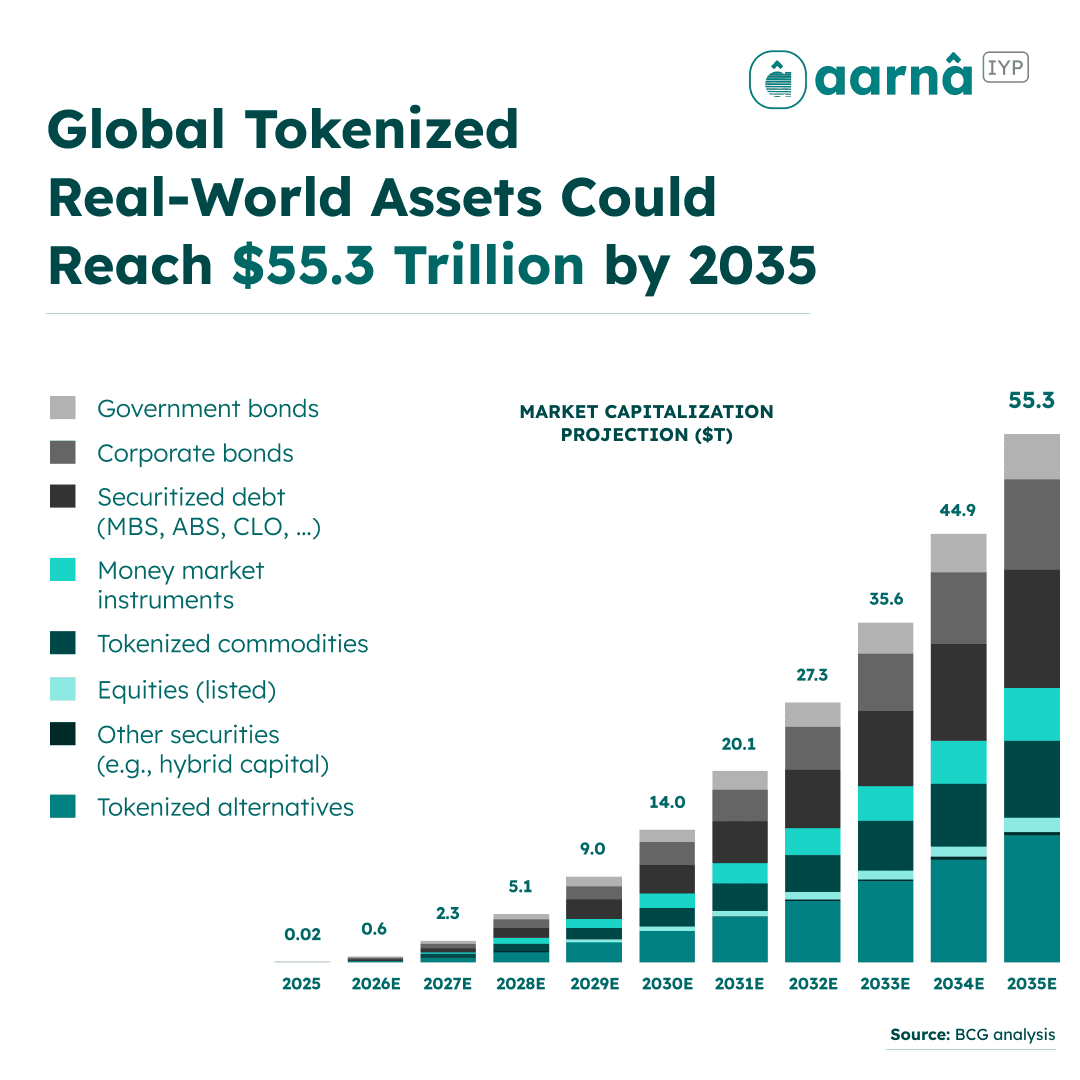
Tokenization has moved well beyond being a niche digital-asset experiment. RWA.xyz is now tracking roughly $38 billion of tokenized real-world assets, while projections for the coming decade increasingly run into the trillions. BCG's 2026 middle-case estimate puts tokenized real-world assets at $14 trillion by 2030 and $55 trillion by 2035. The exact forecast will undoubtedly move around. The direction is more important.
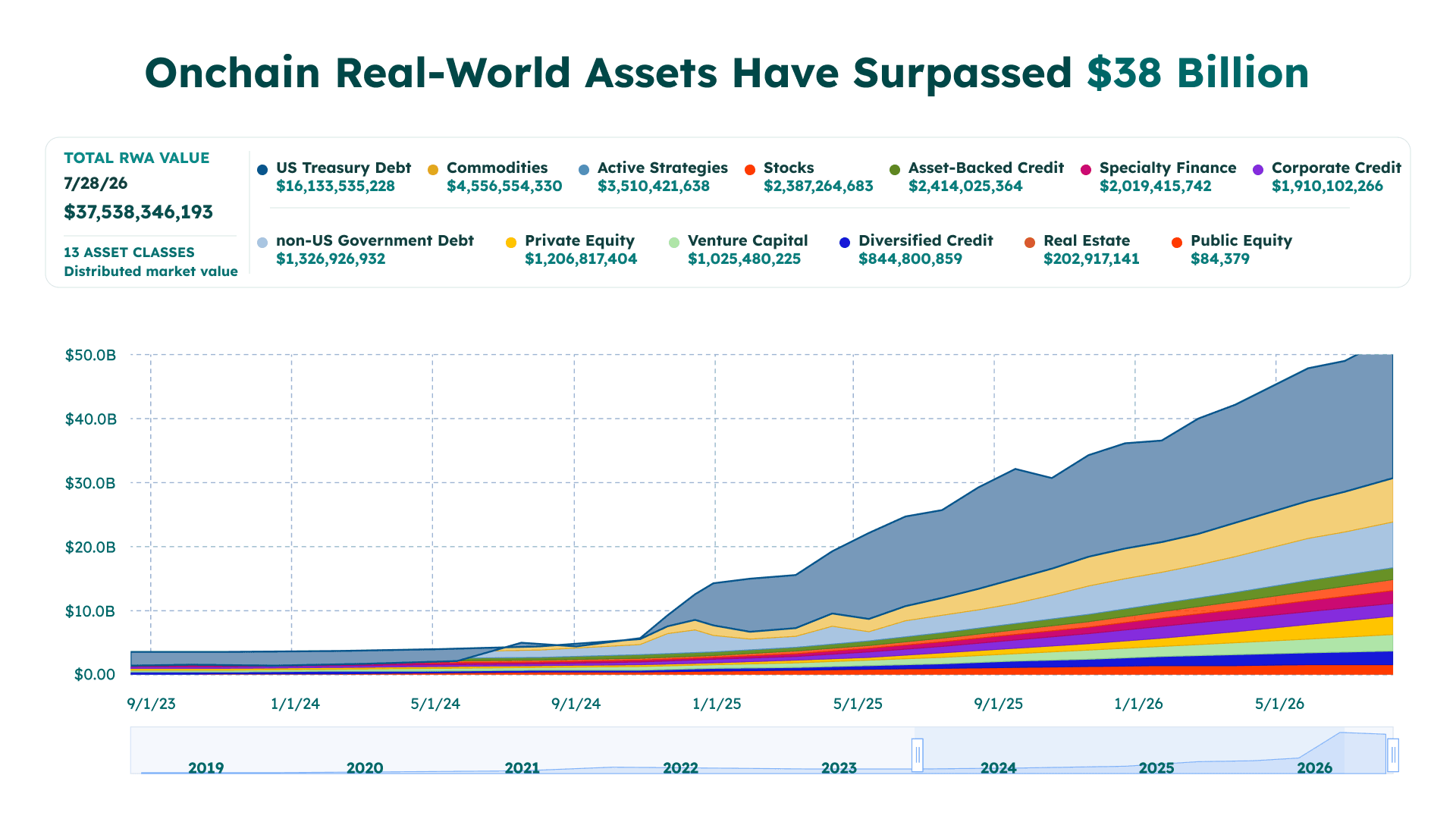 Capital-market infrastructure is beginning to become programmable. Assets can increasingly carry ownership and transfer permissions digitally, settle against digital cash, move between eligible investors, and ultimately participate in collateral, liquidity and financing workflows without losing the legal and regulatory protections attached to the underlying assets.
Against that backdrop, India is strikingly underrepresented.
India already has more than $7 trillion of financial depth across its equity and debt markets, alongside a rapidly developing private-credit ecosystem and increasingly sophisticated asset managers. Yet almost none of this exists today in a form that can participate meaningfully in the emerging tokenized financial system.
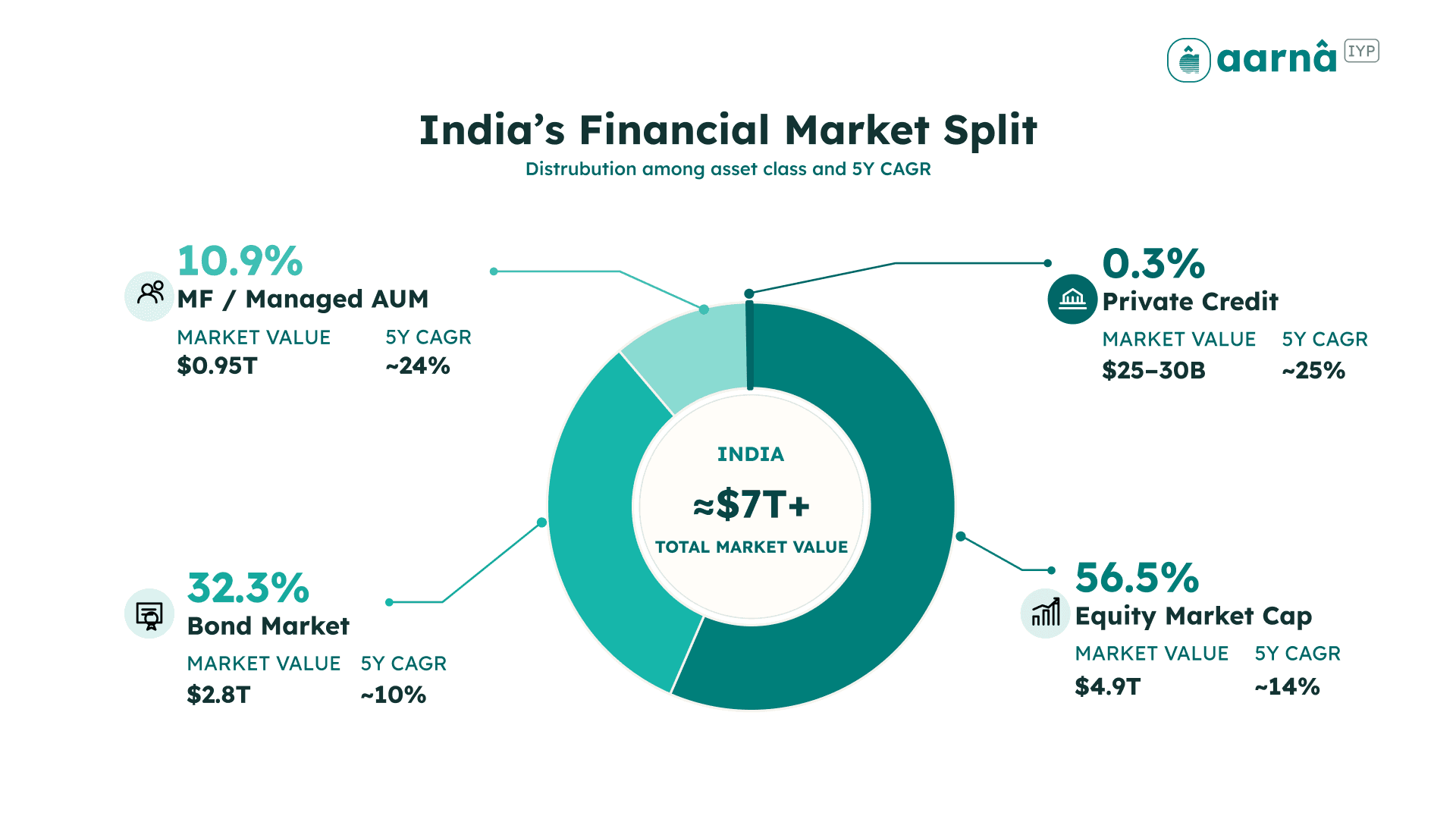 That mismatch is what interests me.
India has undergone an extraordinary financialization over the last two decades. Domestic savings have steadily moved towards financial assets. Public markets have deepened. The range of financing available to Indian businesses has expanded, and the asset-management industry has become considerably more sophisticated.
Until now, that financialization has largely been viewed through a domestic lens: more Indians owning financial assets, deeper pools of domestic capital and more efficient financing of the Indian economy.
There is another dimension now becoming possible.
The next phase of India's financialization can also be about distribution: making more of India's financial assets accessible to global capital through efficient, compliant and digitally native instruments.
Global investors can, of course, already invest in India. The issue is not absence of access. It is how that access works. Much of the current architecture was built for conventional institutional finance, involving regulatory registrations, multiple intermediaries, jurisdiction-specific onboarding, currency and INR settlement processes, and structures whose economics frequently make the most sense at institutional scale.
Tokenization does not make those regulatory requirements disappear, nor should it. What it can do is create a new architecture around them, where investor eligibility, ownership, transfer restrictions, settlement and servicing become embedded into how the asset itself operates.
A Large Pool of Capital, Cut Off From Indian Markets
The supply-side argument is well understood: India has financial depth that global capital cannot efficiently reach. Less discussed is the demand-side reality.
Over $300 billion in stablecoin supply has now formed — a pool of digital-native capital that does not naturally flow back into traditional finance. USDT and USDC alone account for more than $250 billion. This is no longer retail speculation money. It is increasingly institutional: the working capital of digital-asset funds, the treasury reserves of onchain protocols, the digital-asset allocations of sophisticated family offices and endowments.
Most of this capital is deployed in US Treasury proxies. Products like Ondo's USDY and Superstate have absorbed significant stablecoin capital doing exactly this, and they are good products for what they do. But what they do is give digital-native capital another representation of the USD risk-free rate. Uncorrelated to digital-asset volatility, yes. Uncorrelated to US monetary policy? No.
Sophisticated digital-asset allocators understand this distinction. Many of them are actively looking for yield that is genuinely non-correlated — not just "not crypto" but "not dollar rates either."
India's performing credit market offers exactly that. Its return drivers are structural and domestic: credit demand from India's infrastructure build-out, mid-market corporate growth, consumer finance — activity driven by India's own economic cycle, not the Federal Reserve's. This is not an emerging-market risk premium dressed up as diversification. It is a different return engine.
And yet Indian capital markets have had no access to this $300 billion pool. The stablecoin capital and the institutional frameworks built around it have been entirely inaccessible to Indian asset managers and the financial products they run. Not because of appetite — the yield premium India offers over US Treasuries is well understood in institutional circles — but because the infrastructure to bridge the two did not exist.
Both sides of this market are stuck. Global digital-asset capital cannot compliantly access Indian assets. Indian assets cannot reach global digital-asset capital. That two-sided exclusion is the specific problem IYP is being built to solve.
From DeFi Asset Management to Financial-Market Infrastructure
That is also the context for aarnâ's evolution.
We started in DeFi because it offered a completely new design space for asset management. Building there meant solving problems around programmable vaults, execution, identity, portfolio construction, smart-contract risk and the movement of assets across an entirely onchain environment. AI increasingly became part of that work as well, particularly around assessment, monitoring and portfolio intelligence.
Over time, a larger opportunity became clear. The real potential of those capabilities was not limited to building another digital-asset-native investment product. It was in connecting real financial assets with global programmable capital.
The move into IYP is therefore not a technology stack assembled around the current interest in tokenization. The core technology has been developed entirely in-house over the last three years, building expertise across smart-contract architecture, tokenized asset management, identity and permissioning, execution, risk systems and AI-assisted portfolio intelligence.
IYP brings that work into regulated financial markets.
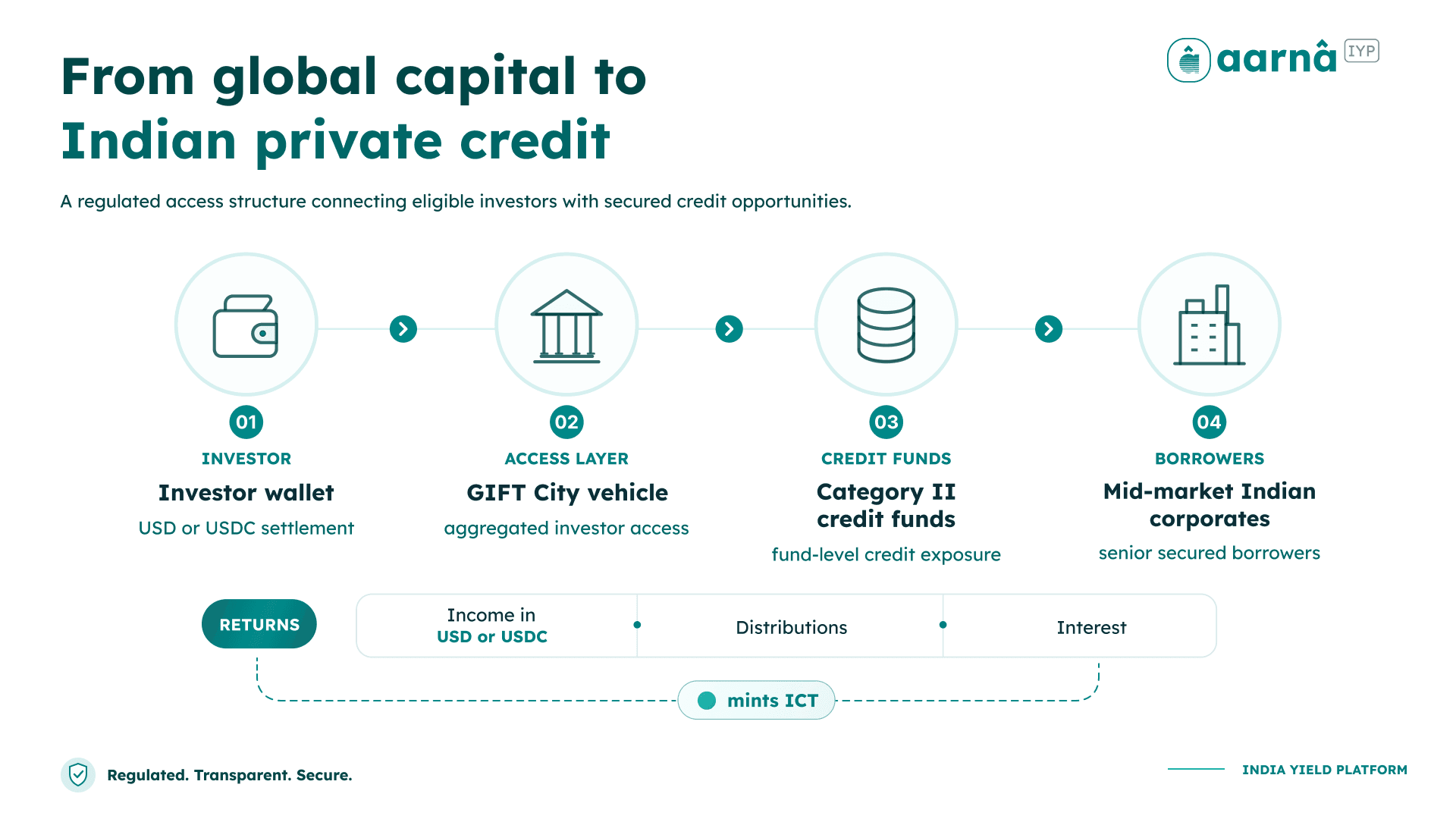
At the same time, technology is only part of what needs to work. Tokenized markets bring together asset management, market structure, regulation, distribution, custody, digital assets and blockchain infrastructure, disciplines that have historically developed in different parts of finance.
We are therefore assembling a high-calibre advisory council spanning traditional capital markets and digital assets to pressure-test the architecture and market approach as IYP develops. The first members are already on board, and I will share more about the council shortly.
The Platform, Not Just the Token
A token itself is not particularly difficult to create. Building a financial product that institutions can actually hold, distribute and use is a very different exercise.
IYP is being designed around that full path: the underlying financial asset and legal structure, investor identity and eligibility, permissioned ownership and transfer, digital settlement, NAV and reporting, distributions, redemptions and ongoing asset servicing.
And issuance is only the beginning.
For tokenized assets to become meaningful at scale, they need distribution and utility. Where can they be held? Which investors and platforms can access them? How do they settle? How easily can they enter an institutional portfolio? Can they ultimately participate in collateral, financing or other financial workflows?
This is particularly important for a platform such as IYP. The opportunity is not simply to originate Indian assets and put them onchain. It is to connect those assets into a broader global ecosystem of institutional allocators, digital-asset institutions, wealth platforms, custodians, settlement infrastructure and onchain capital.
That ecosystem will be as important to the success of tokenized financial assets as the underlying technology.
Starting With Indian Credit
The first proposed product on IYP is ICT, the India Credit Token, a permissioned digital token designed to give eligible global investors access to performing Indian credit managed by established asset managers, institutionally rated, listed.
Credit is a deliberate starting point.
Much of the yield available in tokenized markets today remains concentrated around US Treasuries and Treasury-linked products. RWA.xyz currently tracks more than $15 billion in tokenized US Treasury products alone. Indian performing credit introduces a different underlying return engine, driven by domestic credit demand, businesses and economic activity rather than simply another representation of dollar risk-free rates.
ICT is intended to provide real underlying exposure, with eligibility, ownership, settlement and servicing built into the structure. It is the first product, not the extent of IYP. Over time, the same infrastructure can support a broader range of Indian financial assets.
Earlier this year, I wrote in The Economic Times that India should treat tokenization as a capital-market infrastructure question rather than a digital-asset theme to watch from a distance.
I believe that more strongly today.
If even a fraction of the world's financial assets move onto programmable infrastructure over the coming decade, India has too much financial depth to sit at the edge of that transition. Equally, the opportunity is larger than simply creating digital versions of existing Indian Assets. It is to make Indian financial products easier to access, distribute and eventually use within global capital markets.
There is a considerable amount still to build, both at aarnâ and across the ecosystem around tokenized assets. That is precisely why we are starting to put IYP into the market now, before commercial launch, and beginning conversations with the financial institutions, digital-asset participants and infrastructure partners that can help shape what this becomes.
A significant part of the future of capital markets will be tokenized. India has too much financial depth to sit at the edge of that transition. aarnâ IYP is our attempt to change that.